
 English
 Français
 русский
 Español
 Deutsch
 عربى
عربى

How Does PU Insulating Glue Improve Waterproofing and Thermal Insulation?
Content
- 1 1. Introduction: Definition and Application Background of PU Insulating Glue
- 2 2. Basic Characteristics of PU insulating glue
- 3
- 4 3. Application of PU insulating glue in foam materials
- 5 4. Waterproof and sealing applications
- 6 5. Selection and Construction Guide for PU insulating glue
- 7 6. Frequently Asked Questions (FAQ)
- 8 7. Conclusion: Overall Value of PU insulating glue
1. Introduction: Definition and Application Background of PU Insulating Glue
1.1 Material Concept and Basic Positioning
PU insulating glue is a functional adhesive based on polyurethane systems. Its core feature is not only bonding, but also providing insulation, cushioning, waterproofing, and structural reinforcement at the same time. After curing, it forms a flexible and stable polymer network structure, allowing materials to bond firmly while adapting to long-term deformation and environmental changes.
1.2 Industrial Value and Significance
In modern industrial systems, the importance of this material goes far beyond traditional adhesives. The construction industry relies on it for insulation layer fixation and structural sealing, the electronics industry uses it for precision component protection and insulation encapsulation, and home manufacturing often applies it for composite bonding and waterproof treatment. The key value of PU insulating glue lies in its ability to balance strength and flexibility, enabling different material systems to work together stably.
1.3 Article Structure Overview
This article focuses on five major application scenarios and selection methods, combined with performance analysis and practical guidance to provide a comprehensive understanding of PU insulating glue.
2. Basic Characteristics of PU insulating glue
2.1 Molecular Structure and Performance Basis
The performance of PU insulating glue comes from the cross-linked structure formed after polyurethane curing. This structure is both rigid and flexible, allowing deformation under stress without damaging the overall bonding system. Unlike traditional adhesives, its advantage lies in balanced performance rather than a single indicator.
2.2 Thermal Insulation and Temperature Resistance
The internal microstructure provides low thermal conductivity, giving PU insulating glue the characteristics of a thermal insulation adhesive. After modification, it can also function as a high temperature resistance glue, maintaining stability under large temperature variations.
2.3 Comprehensive Performance Comparison
| Performance Dimension | PU insulating glue Performance | Engineering Meaning |
| Bonding Strength | Medium to High | Compatible with multiple materials |
| Flexibility | Excellent | Resists deformation and stress |
| Thermal Insulation | Good | Reduces heat transfer |
| Weather Resistance | Excellent | Suitable for outdoor use |
| Temperature Resistance | Medium to High | Industrial environment adaptation |

3. Application of PU insulating glue in foam materials
3.1 Challenges in Foam Bonding
Foam materials such as polyurethane foam and EVA foam are lightweight and porous, making bonding difficult. Conventional adhesives often fail due to weak surface adhesion.
3.2 Mechanism of foam bonding adhesive
As a foam bonding adhesive, PU insulating glue penetrates micro-pores during curing and forms a dual bonding system: mechanical interlocking and surface adhesion.
3.3 Foam Bonding Performance Comparison
| Adhesive Type | Initial Bonding | Long-Term Stability | Foam Suitability |
| Ordinary Adhesive | Average | Weak | Not recommended |
| Hot Melt Adhesive | Medium | Aging risk | Partially suitable |
| PU insulating glue | Excellent | Stable | Highly suitable |
3.4 Practical Applications
It is widely used in insulation panel bonding, cushioning packaging systems, soundproof layering, and industrial foam assemblies.
4. Waterproof and sealing applications
4.1 Structural Features of waterproof PU glue
Modified PU insulating glue forms a dense elastic film after curing, providing excellent moisture resistance, known as waterproof PU glue.
4.2 Construction sealing applications
As a construction sealing adhesive, it is used in door and window sealing, curtain wall joints, roof waterproofing, and concrete joint treatment.
4.3 Waterproof Performance Comparison
| Material Type | Waterproof Ability | UV Resistance | Service Life |
| Acrylic | Medium | Weak | Short |
| Silicone | Good | Medium | Medium |
| PU insulating glue | Excellent | Excellent | Long |
4.4 Electronic and Outdoor Applications
In electronics, it is used for PCB moisture protection and component encapsulation. In outdoor environments, it provides long-term waterproof and anti-aging protection.
5. Selection and Construction Guide for PU insulating glue
5.1 Selection Logic
Selection should be based on application requirements. Thermal insulation, structural bonding, and electronic encapsulation each require different performance priorities.
5.2 Construction Environment Factors
Temperature, humidity, and surface cleanliness directly affect performance. Poor surface conditions significantly reduce bonding strength.
5.3 Key Construction Factors
| Factor | Ideal Condition | Impact |
| Temperature | Stable room temperature | Curing speed |
| Humidity | Moderate | Foaming structure quality |
| Surface Cleanliness | Oil-free and dust-free | Bonding strength |
| Adhesive Uniformity | Consistent layer | Structural stability |
6. Frequently Asked Questions (FAQ)
6.1 Difference from ordinary adhesives
PU insulating glue provides bonding, insulation, waterproofing, and cushioning, while ordinary adhesives typically offer only basic bonding functionality.
6.2 Effect of thermal expansion
Its flexible structure absorbs stress caused by temperature changes, preventing cracks and delamination.
6.3 Compatibility with metal and glass
It can bond well with metal and glass after proper surface treatment such as cleaning and priming.
7. Conclusion: Overall Value of PU insulating glue
7.1 Core Value Summary
PU insulating glue integrates bonding, insulation, waterproofing, and structural reinforcement into a single functional system.
7.2 Future Development Trends
Future development focuses on low-VOC formulations, higher durability, and more precise functional customization.
7.3 Final Remarks
PU insulating glue has evolved into a functional material system rather than a simple adhesive. With proper selection and application, it provides long-term stability and protection across multiple industries.
-
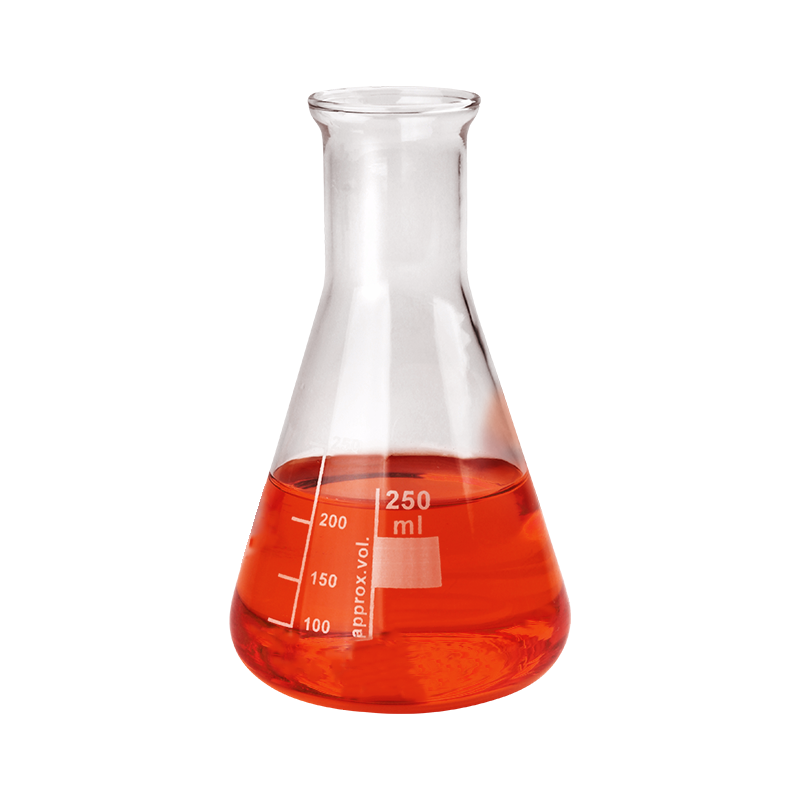
HU-6302A/B=100/25 Polyurethane Low Viscosity High Penetration Insulation Impregnation Glue
-
HU-6103A/B=100/20 Polyurethane Long Operating Time Insulation Potting Glue
-
HU-6906A/B=100/25 Polyurethane Ultra-High Viscosity Quick-Drying Insulation Sealant
-
-
HU-6509A/B=100/15 Polyurethane High Viscosity Anti-Sag Insulation Sealant
-
HU-6101A/B=100/20 Polyurethane General Purpose Slow Drying Insulation Potting Adhesive
Contact
Tel: +86-21-54943138
Phone:
Sales Ricky:+86-136 1183 0385
Sales Jason:+86-186 1635 6961E-mail: [email protected]
[email protected]
[email protected]
Get Connected
Copyright © Shanghai Xrun Resin Co., Ltd. All rights reserved. Privacy Custom Epoxy Resin Systems Suppliers
