
 English
 Français
 русский
 Español
 Deutsch
 عربى
عربى

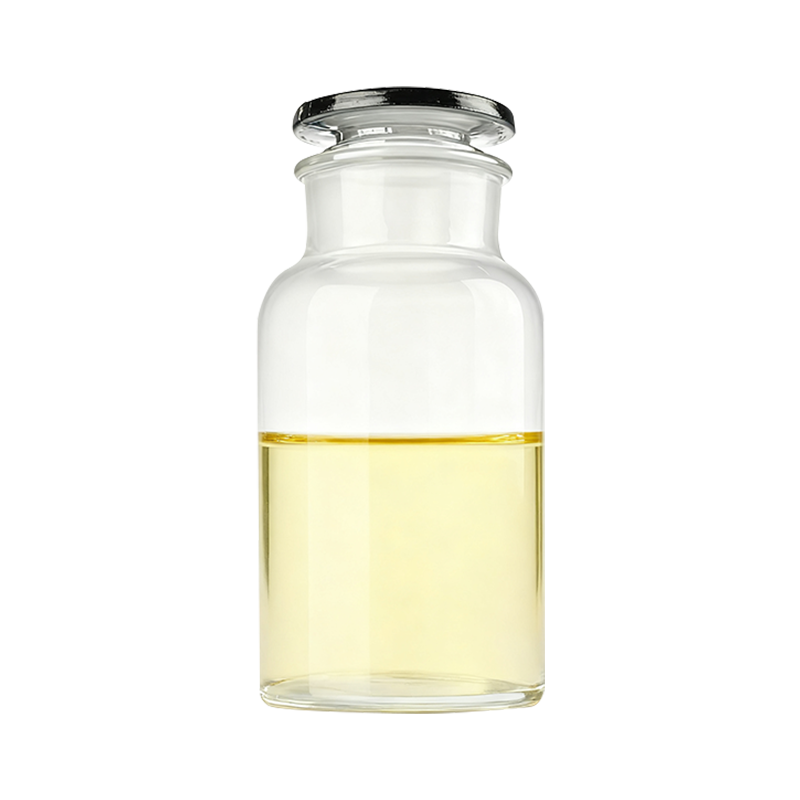
Characteristics Room temperature cure, improved curin...
Search
Form of matter
- Solid state
Glass transition temperature
- 60-70℃
- 70-80℃
- 80-90℃
- 90-100℃
- 100-110℃
- 110-120℃
- 120-130℃
- 130-140℃
- 140-150℃
- 150-160℃
- 160-170℃
- 170-180℃
- 180-190℃
Craft
- Potting
- Coating
Application
- Electrical components
Classification
- Epoxy insulating glue
- --Epoxy Resin Systems Curing at Ambient Temperature
Characteristics
- Low-Temperature Resistance
- Room temperature curing
- Smooth surface
- High TG
Hot Products
Ambient Temperature Epoxy Resin Manufacturers
-
-
Characteristics Room-temperature curing, fast curing ...
-
Characteristics Room temperature cure, improved curin...
-
Characteristics Room temperature curing, improved cur...
-
Characteristics Room-temperature curing, smooth surfa...
-
Characteristics Pre-filled, medium cure speed, smooth...
-
Characteristics Room-temperature curing, fast curing ...
-
Characteristics Room-temperature curing, medium curin...
The room-temperature curing epoxy resin system is mainly used for the encapsulation of low-voltage coils and the potting of components.It features a long pot life,ultra-low temperature resistance, and a smooth surface.
| Formula | Characteristics | Application Process | Application |
| HJ-6011A/HJ-6011B | Rapid curing at room temperature | Potting, Coating | Electronic Components and Composite Materials |
| HJ-6023A/HJ-6023B | Rapid curing at room temperature | Potting, Coating | Electronic Components |
| HJ-6028A/HJ-6028B | Rapid curing at room temperature, Surface smoothness | Potting, Coating | Electronic Components and Composite Materials |
| HJ-6031A/HJ-6031B | Outdoors, Room temperature curing, Surface smoothness | Potting, Coating | Electronic Components and Composite Materials |
| HJ-6216A/HE-6216B | Rapid curing at room temperature, Surface smoothness | Potting, Coating | Electronic Components and Composite Materials |
| HE-6872/HH-6872 | Room temperature curing, Can make the time long, High TG | Potting, Coating, Casting, Impregnation | Electronic Components and Composite Materials |
| HE-6873/HH-6873 | Room temperature curing, Can make the time long, Surface smoothness | Potting, Coating, Casting, Impregnation | Electronic Components and Composite Materials |
| HE-6897/HH-6897 | Room temperature curing, High TG | Potting, Coating, Casting, Impregnation | Electronic Components and Composite Materials |
| HE-852/HH-852 | Room temperature curing, Can make the time long, Surface smoothness | Potting, Coating, Casting, Impregnation | Electronic Components and Composite Materials |
| HW-6028/HH-6029 | Room temperature curing, Small temperature rise | Potting, Coating, Casting | Electronic Components and Composite Materials |
| HW-6068A/HE-6068B | B Room temperature curing, Resistant to ultra-low temperature, High temperature resistance | Potting, Coating, Casting | Electronic Components and Composite Materials |
News Updates
Follow news and information to stay informed about industry trends
-
2026-10-15
Why the Supplier You Choose Determines Insulation Performance Electrical insulation is not a commodity purchase. A transformer that fails after two years, a GIS spacer that cracks under thermal cycling, or an FRP rod that delaminates under load all trace back to one decision made months earlier: wh...
-
2026-10-09
A transformer casting can pass a visual inspection and still fail partial discharge testing months later, and the reason is often hidden inside one process variable that nobody wrote down: the viscosity of the mixed resin at the moment it entered the mold. Voids that never escaped, glass cloth that...
-
2026-10-01
The 80% Rule: A Load Limit Backed by Insulation Physics The 80% rule for transformers states that a transformer should not carry a continuous load above 80% of its rated capacity. Push past that line and the unit is no longer considered healthily loaded. Windings run hotter, insulation ages faster,...
About Xrun Resin
Founded on Sept.9th,1999, Xrun is a professional company of electrical insulation materials. As China Ambient Temperature Epoxy Resin Manufacturers, we can offering Custom Room Temperature Curing Epoxy Resin for transformers, GIS, switchgear, and cable accessories. With the advantage of speciality, Xrun focuses on R&D of epoxy resin and polyurethane insulating glue as well as the production, serving for electrical facilities. There are two factories(located in Jiading District & Songjiang District in Shanghai, China) and an R&D Institute. With more than 100 employees, it adopts automatic production and digital management. So far, Xrun has supplied the market with more than 180 thousand tons of epoxy materials for electrical insulation. As a company in the field, Xrun has undertaken several national projects of the domestication of new epoxy materials for electrical insulation.
1999
“ From this year “
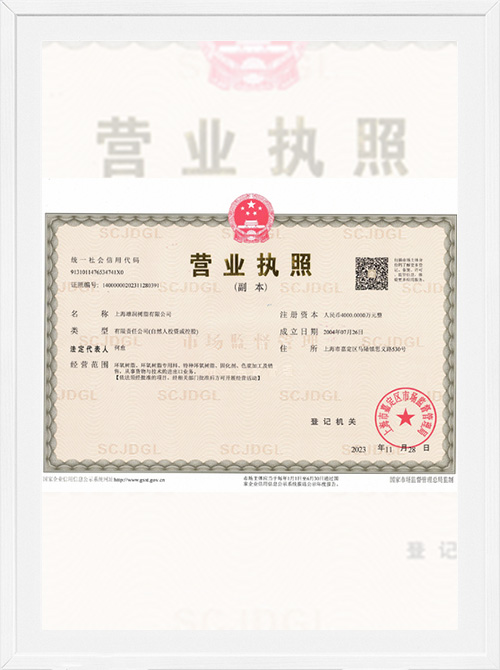
CERTIFIED BY
Certifications
INDUSTRY KNOWLEDGE
Industry Knowledge
What Room Temperature Curing Actually Means for Electrical Encapsulation
The term "room temperature curing" describes epoxy systems that achieve full crosslinking without an external heat source — typically between 15 °C and 35 °C, depending on formulation. For electrical insulation applications, this curing mechanism matters beyond simple process convenience. Components that cannot tolerate oven temperatures — such as pre-assembled PCB subassemblies, wound coils with thermoplastic bobbins, or sensors with integrated connectors — can be potted and cured in place without thermal stress to surrounding materials.
The chemistry behind ambient cure differs substantially from heat-cure anhydride systems. Room temperature curing systems typically use amine or polyamide hardeners, which react with epoxy groups at lower activation energies. This means the exotherm of the curing reaction — the heat generated as crosslinks form — becomes a design variable rather than a given. Low-exotherm formulations are essential for potting heat-sensitive components or large-volume castings where accumulated heat could cause thermal shock, void formation, or delamination at the encapsulant-substrate interface.
Pot life — the usable working time after mixing resin and hardener — is the other critical variable. Rapid-cure systems offer short pot lives suited to high-throughput automated dispensing lines; long-pot-life systems provide the working window needed for manual potting of complex assemblies or large components where complete void-free fill takes time.
Matching Ambient Temperature Epoxy Resin Properties to Application Requirements
Selecting the right ambient temperature epoxy resin requires balancing several properties that do not always move in the same direction. Engineers specifying materials for low-voltage coil encapsulation, electronic component potting, or composite bonding should evaluate the following parameters together rather than optimizing for any single characteristic.
Glass Transition Temperature (Tg)
Room temperature curing systems generally achieve lower Tg values than heat-cure counterparts due to incomplete crosslink density at ambient conditions. However, certain formulations — particularly those designed for casting and impregnation with extended working times — are engineered to achieve high Tg even under ambient cure conditions, expanding their thermal operating envelope for demanding electronic and power applications. A post-cure step at moderate temperature (60–80 °C) can further increase Tg where the application permits it.
Surface Quality
Surface smoothness after cure is not cosmetic — it affects the dielectric uniformity of the encapsulant surface, its resistance to surface tracking under contamination, and its suitability for secondary operations such as marking or overmolding. Formulations with surface-smooth characteristics are specifically formulated to minimize amine blush, a surface defect caused by moisture reaction with amine hardeners during cure that results in a waxy, low-gloss layer with degraded adhesion and dielectric properties.
Temperature Resistance Range
Electrical equipment operating outdoors or in uncontrolled environments must maintain insulation integrity across a wide temperature window. Xrun's ambient-cure portfolio includes systems with ambient temperature epoxy resin formulations combining ultra-low temperature resistance (down to −40 °C and below) with high-temperature performance — a combination that prevents brittle fracture during cold-weather thermal contraction while preserving dielectric strength during summertime electrical loading.
Process Versatility: Potting, Coating, Casting, and Impregnation
A well-designed room temperature curing system can serve multiple manufacturing processes, reducing the number of qualified materials a production facility must manage. The four primary application modes each impose distinct rheological requirements.
- Potting: The encapsulant fills a housing or shell around the component. Medium viscosity is preferred — low enough to displace air from complex geometries, high enough to remain in position without sagging before gel. Exotherm management is critical for large-volume pots.
- Coating: Thin film application over PCBs or wound components for moisture and contamination protection. Low viscosity and good surface wetting are essential, combined with surface smoothness to ensure uniform film thickness.
- Casting: Gravity or low-pressure fill into open molds, typically for larger components or irregular geometries. Long pot life formulations are favored to ensure complete fill before gelation; low exotherm prevents thermal distortion of the mold or embedded parts.
- Impregnation: Vacuum-assisted penetration of wound coils or porous composite structures. Very low initial viscosity is mandatory; the system must maintain low viscosity throughout the impregnation cycle before curing in place to consolidate and seal the structure.
Multi-process capable systems reduce qualification burden on manufacturing teams and provide flexibility when production runs shift between component types. Xrun offers several room temperature curing epoxy resin grades validated across all four process modes — potting, coating, casting, and impregnation — supporting consolidated procurement for facilities handling diverse component types.
Outdoor and Composite Applications: Additional Durability Considerations
When ambient-cure epoxy systems are used in outdoor electrical installations or as matrix resins in structural composites, the performance baseline shifts. UV stability, hydrolytic resistance, and long-term adhesion under cyclic moisture exposure become relevant alongside the standard electrical insulation parameters.
Outdoor-rated ambient-cure formulations are distinguished from standard indoor grades by their resistance to surface chalking and yellowing under prolonged UV exposure, and by maintained adhesion to common substrates — copper, aluminum, glass fiber, and engineering plastics — after weathering cycles. For encapsulated components mounted in junction boxes, distribution panels, or outdoor sensor housings, these properties directly affect the service interval and replacement frequency of the installed equipment.
In composite material applications, the epoxy matrix bears structural loads in addition to providing environmental protection. Here, the fracture toughness of the cured system — its resistance to crack propagation under cyclic mechanical loading — is as important as its electrical properties. With over 25 years of formulation experience and more than 180,000 tons of electrical insulation epoxy supplied to market, Xrun has developed ambient-cure systems that address composite matrix requirements without compromising the dielectric performance expected from electrical-grade materials.
Message Us Right Now!
Contact
Tel: +86-21-54943138
Phone:
Sales Ricky:+86-136 1183 0385
Sales Jason:+86-186 1635 6961E-mail: [email protected]
[email protected]
[email protected]
Get Connected
Copyright © Shanghai Xrun Resin Co., Ltd. All rights reserved. Privacy Room Temperature Curing Epoxy Resin Factory
