
 English
 Français
 русский
 Español
 Deutsch
 عربى
عربى




Characteristics Thermal conductivity ≥ 0.9W/m.K, flam...
Search
Form of matter
- Adjustable Formula
Glass transition temperature
- 50-60℃
- 60-70℃
- 70-80℃
- 80-90℃
- 90-100℃
- 100-110℃
- 110-120℃
- 120-130℃
- 130-140℃
- 140-150℃
- 150-160℃
- 160-170℃
- 170-180℃
- 180-190℃
Craft
- APG
- Vacuum casting
Application
- Transformers
Classification
- Epoxy insulating glue
- --Epoxy Systems for CT/VT
Characteristics
- UItra-Low-Temperature Resistance
- Good electromechanical properties
- Low viscosity
- High crack resistance
- High thermal conductivity
- Crack-resistant
- Flame retardant
Hot Products
High Voltage Epoxy For CT/VT Casting Manufacturers
-
-
Characteristics Pre-filled, excellent crack resistanc...
-
Characteristics Outdoor, excellent crack resistance a...
-
Characteristics Outdoor, excellent crack resistance a...
-
Characteristics Outdoor, excellent crack resistance a...
-
Characteristics Multi-component system, adjustable to...
-
Characteristics Flame retardant V0, excellent crack r...
-
Characteristics Excellent crack resistance, excellent...
-
Characteristics Low viscosity, excellent crack resist...
-
Characteristics Excellent crack resistance, excellent...
The structural characteristic of an instrument transformer is that coils, iron cores, and metal conductors are cured with epoxy resin through vacuum casting or APG (Automatic Pressure
Gelation) process. Epoxy resin has a high modulus and brittleness, and there is a significant difference in linear expansion coefficient between epoxy resin and metal coils/conductors.
During the thermosetting molding process, factors such as curing shrinkage, environmental temperature variation, and temperature rise caused by electrical load, leading to epoxy cast transformers being subjected to multi-dimensional coupled stress, which is prone to product cracking and damage, as well as insulator life degradation induced by mechanical, electrical, and thermal factors; cast dry-type transformers thus face reliability risks. The quality of epoxy resin is one of the key factors to address these risks.
Epoxy resin for transformer products is required to have low viscosity and good fluidity; excellent low-temperature resistance, strong crack resistance, superior electrical performance, and low partial discharge, while also possessing good environmental friendliness.
Xrun APG Casting Epoxy Resin for Instrument Transformers
| Formula | Tg(℃) | Characteristics and Properties |
| HE-216/HH-216/X12=100/100/300 | >60 | Excellent crack resistance and good electromechanical properties |
| HE-2707A/HE-2707B/X12=100/100/380 | >80 | Low viscosity,ultra-low temperature resistance, good electromechanical properties, and low partial discharge |
| HE-2709A/HE-2709B/X12/100/100/380 | >85 | Low viscosity, excellent crack resistance, and good electromechanical properties |
| HE-2841A/HE-2841B/X12=100/80/350 | >80 | Low viscosity, superior crack resistance, and good electromechanical properties |
| HE-2842/HH-2842/X12=100/80/320 | >75 | Superior crack resistance, and good electromechanical properties |
| HE-3431A/HE-3431B/X12=100/100/350 | >70 | Low viscosity, superior crack resistance, and good electromechanical properties. Casting process. |
| HE-411/HH-102/X12=100/40/220 | >110 | Solid system, good thermal properties, and excellent electromechanical properties |
| HE-5272/HH-5272/X12=100/100/300 | >60 | Outdoor applicability,ultra-low temperature resistance, and good electromechanical properties |
| HE-5072/HH-5072/X12=100/80/350 | >70 | Outdoor applicability, good crack resistance, and excellent electromechanical properties |
| HE-8272A/HE-8272B/X12=100/100/350 | >80 | Low viscosity, superior crack resistance, and good electromechanical properties |
| HE-8531A/HE-8531B/X12=100/100/350 | >60 | Low viscosity, superior crack resistance, and good electromechanical properties |
| HE-8917A/HE-8917B/X12=100/90/320 | >70 | Good crack resistance and flame-retardant VO |
| HE-8918A/HE-8918B/X12=100/90/320 | >80 | Superior crack resistance and good electromechanical properties |
| HW-2916A/HW-2916B=100/100 | >90 | Ultra-low temperature resistance, suitability for large-scale products, and excellent electromechanical properties |
| HW-2918A/HW-2918B=100/100 | >100 | Ultra-low temperature resistance, suitability for large-scale products, and good electromechanical properties |
News Updates
Follow news and information to stay informed about industry trends
-
2026-10-15
Why the Supplier You Choose Determines Insulation Performance Electrical insulation is not a commodity purchase. A transformer that fails after two years, a GIS spacer that cracks under thermal cycling, or an FRP rod that delaminates under load all trace back to one decision made months earlier: wh...
-
2026-10-09
A transformer casting can pass a visual inspection and still fail partial discharge testing months later, and the reason is often hidden inside one process variable that nobody wrote down: the viscosity of the mixed resin at the moment it entered the mold. Voids that never escaped, glass cloth that...
-
2026-10-01
The 80% Rule: A Load Limit Backed by Insulation Physics The 80% rule for transformers states that a transformer should not carry a continuous load above 80% of its rated capacity. Push past that line and the unit is no longer considered healthily loaded. Windings run hotter, insulation ages faster,...
About Xrun Resin
Founded on Sept.9th,1999, Xrun is a professional company of electrical insulation materials. As China High Voltage Epoxy For CT/VT Casting Manufacturers, we can offering Custom Epoxy Systems For CT/VT for transformers, GIS, switchgear, and cable accessories. With the advantage of speciality, Xrun focuses on R&D of epoxy resin and polyurethane insulating glue as well as the production, serving for electrical facilities. There are two factories(located in Jiading District & Songjiang District in Shanghai, China) and an R&D Institute. With more than 100 employees, it adopts automatic production and digital management. So far, Xrun has supplied the market with more than 180 thousand tons of epoxy materials for electrical insulation. As a company in the field, Xrun has undertaken several national projects of the domestication of new epoxy materials for electrical insulation.
1999
“ From this year “
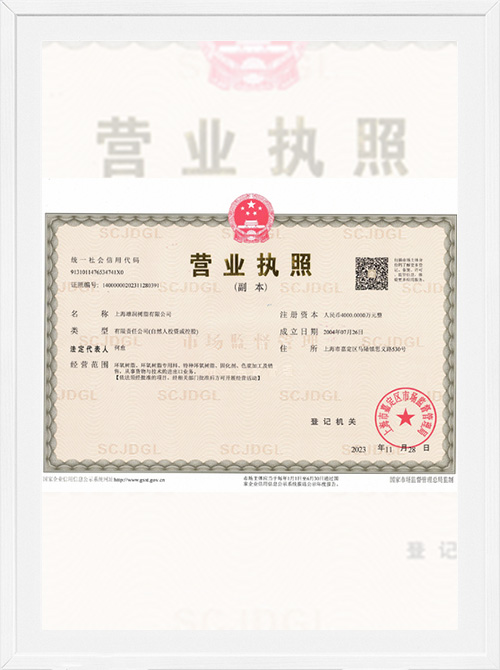
CERTIFIED BY
Certifications
INDUSTRY KNOWLEDGE
Industry Knowledge
Why Epoxy Formulation Determines CT/VT Casting Reliability
Instrument transformers — current transformers (CTs) and voltage transformers (VTs) — encase coils, iron cores, and metal conductors within a single cured epoxy body. This structure subjects the resin to multi-dimensional stress throughout its service life: curing shrinkage during initial molding, differential thermal expansion between the epoxy matrix and embedded metal components, and cyclic thermal loads from electrical operation. Any mismatch in material properties can initiate micro-cracking, accelerate partial discharge, and ultimately reduce insulation life.
The performance requirements that flow from this operating environment are highly specific. A suitable epoxy system must combine low viscosity for complete cavity fill under APG or vacuum casting, high crack resistance to withstand thermomechanical fatigue, and a low partial discharge level to maintain dielectric integrity across voltage cycles. Standard general-purpose resins rarely satisfy all three criteria simultaneously, which is why instrument transformer manufacturers rely on purpose-formulated systems rather than commodity products.
For engineers specifying materials, the glass transition temperature (Tg) of a formulation is a useful indicator of its thermal envelope, but it is not the only variable. Crack resistance, outdoor UV stability, and process compatibility — casting versus APG — each narrow the selection further. Choosing the right system at the design stage reduces field failure rates and warranty exposure over a transformer's typical 20–30 year service life.
Key Performance Parameters in High Voltage Epoxy For CT/VT Casting
Several measurable properties define whether an epoxy system is fit for instrument transformer duty. Understanding these parameters helps procurement and engineering teams evaluate datasheets and supplier claims with greater precision.
- Glass Transition Temperature (Tg): The temperature above which the cured resin transitions from a rigid to a more compliant state. For indoor CT/VT applications, Tg values above 70 °C are typical; solid systems with anhydride hardeners can reach above 110 °C for elevated-temperature duty.
- Crack Resistance: Expressed qualitatively (good / superior / excellent) in technical literature, this property reflects the system's fracture toughness (KIc) and its capacity to absorb stress without crack initiation. Systems with superior crack resistance typically incorporate flexibilizers or toughening agents that reduce the modulus of the cured matrix without sacrificing dielectric strength.
- Viscosity and Fluidity: Low-viscosity formulations (typically achieved through resin selection and filler optimization) fill complex mold geometries completely, eliminating voids that would act as partial discharge sites. This parameter is especially critical for APG-processed parts where gel time and flow rate must be tightly matched.
- Partial Discharge (PD) Level: A low PD level in the cured casting indicates a void-free, homogeneous insulation structure. Ultra-low temperature resistance formulations, which maintain flexibility at sub-zero temperatures, tend to produce fewer internal stresses and consequently lower PD values.
- Flame Retardancy: Some applications specify UL 94 V0 performance, particularly for indoor switchgear-integrated transformers. Halogen-free V0 systems balance fire safety requirements with the mechanical and electrical properties described above.
The filler loading ratio — typically expressed as parts of silica filler (X12 or equivalent) per 100 parts of resin — also affects the final property profile. Higher filler ratios reduce the coefficient of thermal expansion (CTE) of the cured composite, bringing it closer to that of copper and aluminum conductors and thereby reducing thermomechanical stress during operation. Xrun's formulation portfolio for high voltage epoxy for CT/VT casting covers filler ratios from 220 to 380 parts per 100 parts resin, reflecting application-specific CTE targets across its product range.
APG vs. Vacuum Casting: Process Implications for Epoxy Selection
The two dominant casting processes for instrument transformers impose different rheological and reactivity demands on the epoxy system, and the correct formulation must be matched to the intended manufacturing route.
Automatic Pressure Gelation (APG)
APG injects mixed resin under pressure into a heated, closed mold. The process relies on the resin remaining fluid long enough to fill the cavity, then gelling rapidly under heat. Key requirements include a precise gel time window, low initial viscosity to enable complete fill before gelation onset, and sufficient pressure tolerance to compensate for curing shrinkage. APG-optimized liquid systems with viscosities enabling fast mold filling are standard; solid epoxy systems (which must be melted prior to injection) are also used in APG for parts requiring higher Tg.
Vacuum Casting
Vacuum casting draws degassed resin into an open or semi-open mold under reduced pressure, then cures under controlled temperature profiles. Because the mold is not pressurized during fill, the resin must be capable of self-leveling and must have sufficiently low viscosity to displace all air before gel. Longer pot lives are acceptable and sometimes preferred in vacuum casting to accommodate larger or more complex mold geometries. Systems suited for large-scale products — with higher Tg and ultra-low temperature resistance — are commonly associated with this route.
In practice, transformer manufacturers often qualify one system per process route and maintain both in production. The casting process note included in a product's technical specification — such as the explicit "casting process" designation for certain formulas — signals which manufacturing environments the supplier has validated the system for.
Outdoor CT/VT Applications and Environmental Durability
Outdoor instrument transformers face weathering stresses absent from indoor installations: UV radiation, moisture ingress, wide diurnal temperature swings, and in some regions, salt fog or industrial atmospheric pollution. These conditions impose additional requirements on the epoxy casting system beyond the electromechanical baseline.
Outdoor-grade formulations are typically characterized by UV-resistant resin chemistries that resist chalking and surface degradation over decades of sun exposure, combined with maintained crack resistance across a wider temperature range — including sub-zero conditions where thermal contraction stresses peak. Ultra-low temperature resistance is particularly important in regions with continental climates, where nighttime lows can fall below −40 °C while daytime electrical loads heat the transformer body significantly.
For applications at the upper end of the voltage range — where creepage distances are long and surface tracking risk is higher — epoxy systems with hydrophobic surface characteristics or supplementary silicone-modified resin content provide additional protection. Specifiers should confirm that outdoor-rated systems have been validated under IEC 60060 or equivalent high-voltage wet testing protocols before finalizing material selection.
As a manufacturer with over two decades of field experience supplying epoxy systems for CT/VT applications, Xrun has developed dedicated outdoor-applicable formulations that address both UV durability and sub-zero crack resistance within a single product, reducing the complexity of outdoor transformer qualification programs.
Message Us Right Now!
Contact
Tel: +86-21-54943138
Phone:
Sales Ricky:+86-136 1183 0385
Sales Jason:+86-186 1635 6961E-mail: [email protected]
[email protected]
[email protected]
Get Connected
Copyright © Shanghai Xrun Resin Co., Ltd. All rights reserved. Privacy Epoxy Systems For CT/VT Factory
