
 English
 Français
 русский
 Español
 Deutsch
 عربى
عربى



Characteristics Excellent crack resistance, thermal c...
Search
Form of matter
- Adjustable Formula
Glass transition temperature
- 50-60℃
- 60-70℃
- 70-80℃
- 80-90℃
- 90-100℃
- 100-110℃
- 110-120℃
- 120-130℃
- 130-140℃
- 140-150℃
- 150-160℃
- 160-170℃
- 170-180℃
- 180-190℃
Application
- Transformers
Classification
- Epoxy insulating glue
- --Epoxy Systems for Dry-Type Transformers
Characteristics
- UItra-Low-Temperature Resistance
- Low-Temperature Resistance
- Low viscosity
- High crack resistance
- High TG
- High thermal conductivity
- Crack-resistant
Hot Products
Epoxy Casting Resin For Transformers Manufacturers
-
-
Features Pre-filled, can meet CE2/E1 requirements
-
Characteristics Thermal conductivity 1.0W/m.K, excell...
-
Features Pre-filled, excellent reliability, H grade ...
-
Characteristic properties Pre-filled, excellent crack...
-
Characteristics Low viscosity, adjustable to meet per...
-
Characteristics General purpose, adjustable formula t...
-
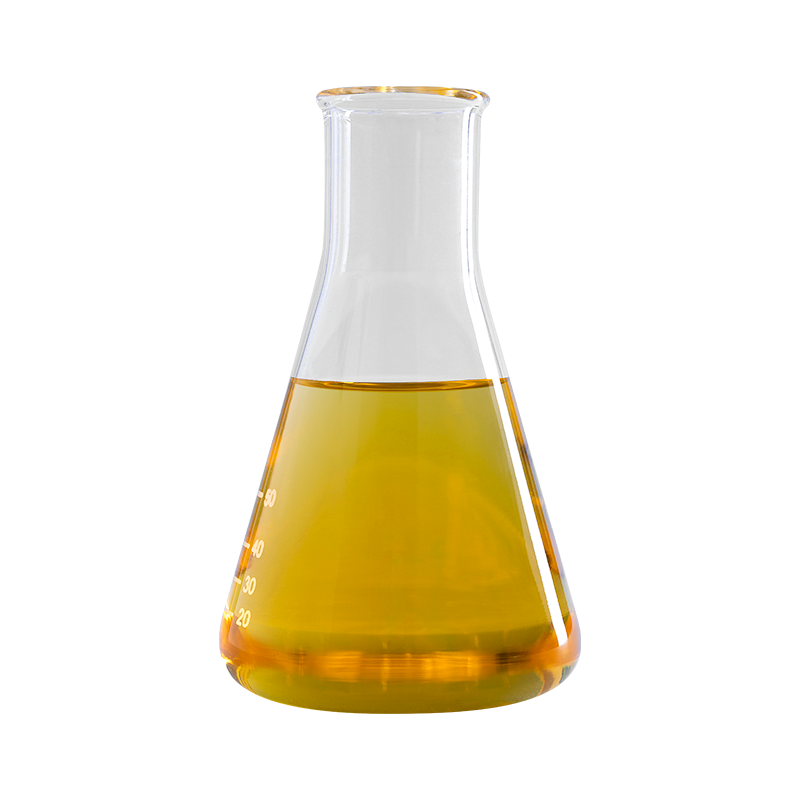
Characteristic properties Pre-filled, excellent crack...
-
Characteristic properties Pre-filled, excellent crack...
-
Characteristics Excellent crack resistance, H grade ...
-
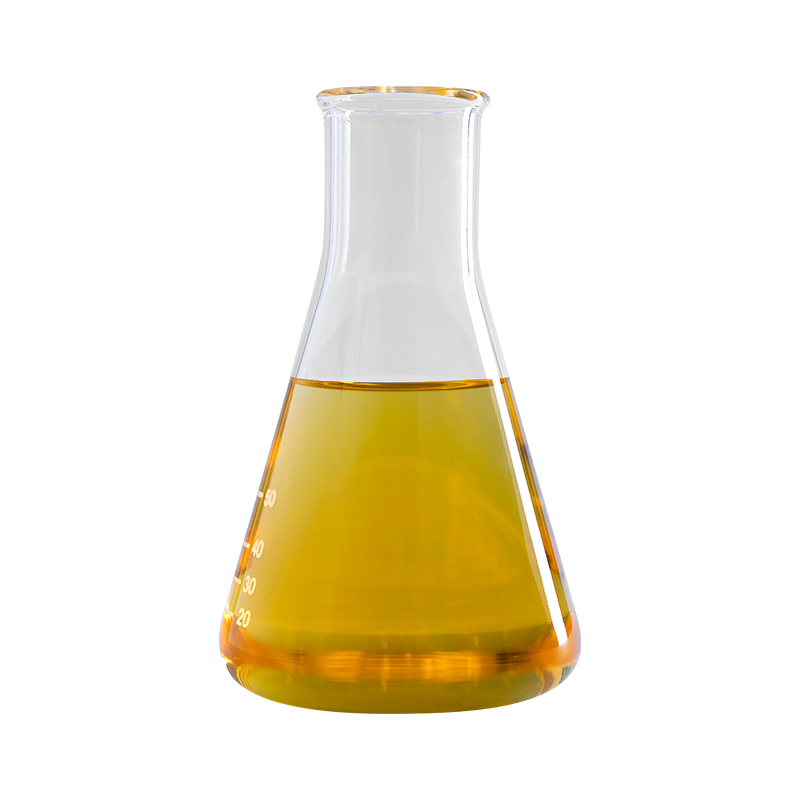
Characteristics Excellent crack resistance, H grade ...
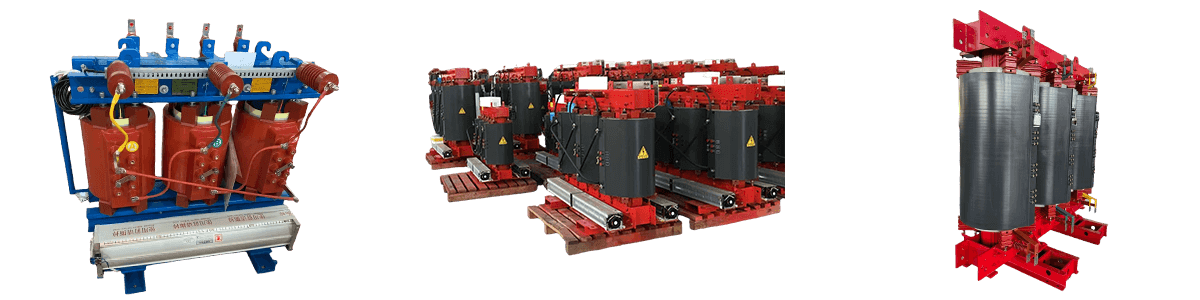
Dry-type transformers are manufactured by embedding coils and metal conductors in epoxy resin. The epoxy material offers excellent electromechanical properties and chemical resistance, but it is characterized by high modulus and brittleness. Additionally, the significant difference in thermal expansion coefficients between the epoxy polymer and the metal coils/conductors poses challenges. During the thermal curing process, factors such as curing shrinkage, high process temperature, ambient temperature fluctuations, and high-temperature rise under electrical loads can lead to multidimensional coupled internal stresses. This, combined with stress-induced degradation of the insulation due to mechanical, electrical, and thermal effects, introduces reliability risks to the product. The quality and performance of epoxy resin are critical, as they directly determine the reliability of cast-resin transformer products.
XRUN's epoxy resins for dry-type transformers are classified as follows:
● By Thermal Class: F-grade and H-grade.
● By Supply Form: Epoxy resin formulations (ready for filler addition).
● Pre-filled epoxy resin compounds (pre-mixed with fillers).
● By Operating Temperature: Standard type (for general environments).
● Ultra-low-temperature resistant type (for extreme cold conditions).
● By Thermal Conductivity: Standard type, High-thermal-conductivity type.
● By Flame Retardancy: Standard type. Flame-retardant type.
| Formulate | Tg(℃) | Feature |
| HE-827/HH-827/X106=100/100/200 | >60 | Ultra-Low Temperature(-65℃), H Class |
| HE-8271/HH-8271/X106=100/100/200 | >70 | Low Temperature(-40℃), H Class |
| HE-8272/HH-8272/X106=100/100/200 | >80 | Low Temperature(-40℃), Fclass |
| HE-8380A/HE-8380B/X106=100/100/200 | >80 | Ultra-Low Temperature(-65℃), H Class |
| HE-8522/HH-8522/HF-640/HA-6750/X106=100/100/0-20/0-1/200-300 | Be tailored | Be Tailored, H Class |
| HE-8523/HH-8523/HF-641/HA-6750/X106=100/85/0-20/0-1/200-300 | Be tailored | Be Tailored, H Class |
| HW-2867A/HW-2867B=100/100 | >70 | Prefilled, Ultra-Low Temperature(-65℃), H Class |
| HW-3906A/HW-3906B=100/100 | >80 | Prefilled, Low Temperature(-40℃), H Class |
| HW-7042A/HW-7042B=100/100 | >55 | Prefilled, Halogen-Free Flame Retradant |
| HW-8369-1A/HW-8369-1B=100/100 | >110 | Prefiiled, Ultra-Low Temprature(-65℃), H Class |
| S2245A/S2245B=100/100 | >75 | Low Temperature、H Class |
| S2145A/S2145B/SF1250=100/100/200 | >80 | Ultra-Low Temprature(-65℃), H Class |
News Updates
Follow news and information to stay informed about industry trends
-
2026-10-15
Why the Supplier You Choose Determines Insulation Performance Electrical insulation is not a commodity purchase. A transformer that fails after two years, a GIS spacer that cracks under thermal cycling, or an FRP rod that delaminates under load all trace back to one decision made months earlier: wh...
-
2026-10-09
A transformer casting can pass a visual inspection and still fail partial discharge testing months later, and the reason is often hidden inside one process variable that nobody wrote down: the viscosity of the mixed resin at the moment it entered the mold. Voids that never escaped, glass cloth that...
-
2026-10-01
The 80% Rule: A Load Limit Backed by Insulation Physics The 80% rule for transformers states that a transformer should not carry a continuous load above 80% of its rated capacity. Push past that line and the unit is no longer considered healthily loaded. Windings run hotter, insulation ages faster,...
About Xrun Resin
Founded on Sept.9th,1999, Xrun is a professional company of electrical insulation materials. As China Epoxy Casting Resin For Transformers Manufacturers, we can offering Custom Epoxy Resin For Dry Type Transformers for transformers, GIS, switchgear, and cable accessories. With the advantage of speciality, Xrun focuses on R&D of epoxy resin and polyurethane insulating glue as well as the production, serving for electrical facilities. There are two factories(located in Jiading District & Songjiang District in Shanghai, China) and an R&D Institute. With more than 100 employees, it adopts automatic production and digital management. So far, Xrun has supplied the market with more than 180 thousand tons of epoxy materials for electrical insulation. As a company in the field, Xrun has undertaken several national projects of the domestication of new epoxy materials for electrical insulation.
1999
“ From this year “
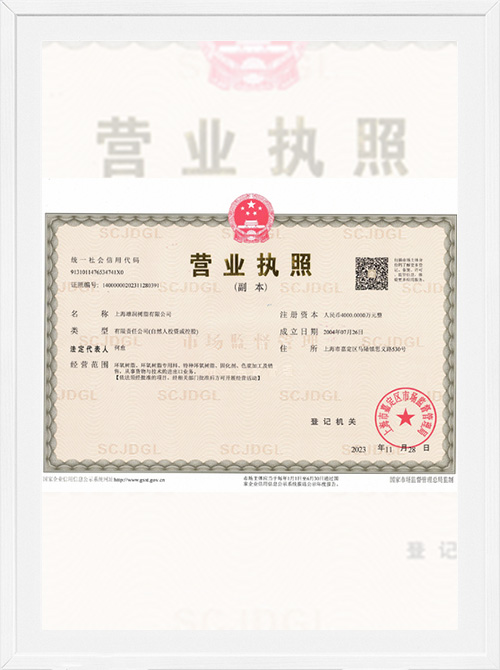
CERTIFIED BY
Certifications
INDUSTRY KNOWLEDGE
Industry Knowledge
How Filler Type and Particle Size Distribution Affect Thermal Conductivity and Crack Resistance of Epoxy Casting Resin For Transformers
For dry-type transformers, Epoxy Casting Resin For Transformers must balance high thermal conductivity for heat dissipation and excellent crack resistance under thermal cycling. Shanghai Xrun Resin Co., Ltd., a professional leader in electrical insulation, has supplied over 180,000 tons of epoxy materials and undertaken national projects for epoxy domestication. With two green factories (Jiading & Songjiang) fully powered by photovoltaics, automatic production lines, and an R&D Institute, Xrun excels in formulating high-performance epoxy systems for dry-type transformers.
1. Effect of Filler Type on Thermal Conductivity and Crack Resistance
Common fillers for transformer castings include silica (SiO₂), alumina (Al₂O₃), and hexagonal boron nitride (h-BN). Their intrinsic properties directly influence composite performance.
- Silica (SiO₂): Low cost, moderate thermal conductivity (1.3-1.5 W/m·K), good crack resistance due to low CTE mismatch (CTE ~0.5 ppm/K vs epoxy ~50 ppm/K). However, thermal conductivity improvement is limited.
- Alumina (Al₂O₃): High thermal conductivity (30-36 W/m·K bulk), excellent for heat dissipation. CTE ~7 ppm/K, moderate mismatch. Better crack resistance than h-BN due to isotropic shape.
- h-BN (hexagonal boron nitride): Very high thermal conductivity (up to 300 W/m·K in-plane, 30 W/m·K through-plane). Anisotropic shape leads to directional properties and potential cracking under thermal stress if not aligned properly.
Recommended for transformers: Al₂O₃ is preferred for balanced thermal and mechanical performance. Shanghai Xrun Resin Co., Ltd. uses surface-treated alumina to enhance interfacial bonding.
2. Effect of Particle Size Distribution (PSD) on Thermal Conductivity
Thermal conductivity in filled epoxy follows percolation theory. Optimized PSD maximizes packing density, reducing thermal boundary resistance.
- Single-size filler: Maximum packing fraction ~0.64, thermal conductivity typically <2.0 W/m·K at 60 vol% loading.
- Bimodal distribution: Coarse (30-50 μm) + fine (0.5-2 μm) particles increase packing to ~0.80-0.85, achieving >2.8 W/m·K at same loading.
- Trimodal distribution: Coarse + medium + fine (nanoparticles 50-100 nm) further reduces interfacial gaps, reaching 3.2-3.5 W/m·K.
Below is a comparative parameter table:
| PSD Type | Packing Density | Thermal Conductivity (W/m·K) at 65 vol% | Viscosity (mPa·s at 80°C) |
|---|---|---|---|
| Single-size (30 μm) |
3. Effect of Filler Type and PSD on Crack Resistance
Crack resistance is governed by fracture toughness (KIC) and coefficient of thermal expansion (CTE).
- CTE reduction: Adding 60 vol% filler reduces epoxy CTE from ~50 ppm/K to 15-25 ppm/K, lowering thermal stress during cure and operation cycles (-40°C to +140°C).
- Fracture toughness (KIC): Rounded alumina gives KIC ~1.2-1.5 MPa·m1/2. Angular silica gives KIC ~1.0-1.2 MPa·m1/2. Fine nanoparticles (50-100 nm) increase KIC to 1.8-2.2 MPa·m1/2 via crack pinning and debonding mechanisms.
- Crack resistance ranking: Bimodal Al₂O₃ (coarse + nano) > Trimodal Al₂O₃ > Bimodal SiO₂ > Single-size filler.
Process challenge: High filler loading increases viscosity, causing casting voids. Shanghai Xrun Resin Co., Ltd. uses automatic vacuum casting and digital rheology control to maintain <0.1% void content.
4. Recommended Formulation for Transformers (Shanghai Xrun Resin Co., Ltd. Data)
- Filler type: Al₂O₃ (surface-treated with silane coupling agent)
- Particle size distribution: 60% coarse (30 μm) + 30% medium (2 μm) + 10% nano (80 nm)
- Filler loading: 65-68 vol%
- Resulting properties: Thermal conductivity = 3.0 W/m·K, CTE = 18 ppm/K, KIC = 1.9 MPa·m1/2, no cracks after 500 thermal cycles (-40°C to +140°C).
FAQ
Q1: How does Shanghai Xrun Resin Co., Ltd. optimize filler particle size distribution for Epoxy Casting Resin For Transformers?
A: At Shanghai Xrun Resin Co., Ltd., our R&D Institute uses digital modeling and automatic production lines to achieve precise bimodal/trimodal blends. With two factories (Jiading & Songjiang) producing >50,000 tons/year and over 180,000 tons supplied to market, we ensure consistent PSD control. Both factories are 100% photovoltaic-powered for sustainable manufacturing.
Q2: What thermal conductivity and crack resistance values can be expected from Shanghai Xrun's Epoxy Casting Resin For Transformers?
A: Our epoxy systems for dry-type transformers achieve 2.8-3.5 W/m·K thermal conductivity (depending on filler loading) and pass 500+ thermal cycles without cracking. We use surface-treated Al₂O₃ with trimodal PSD to balance both properties.
Q3: Does Shanghai Xrun Resin Co., Ltd. provide customized Epoxy Casting Resin For Transformers formulations for different voltage classes?
A: Yes. Shanghai Xrun Resin Co., Ltd. has undertaken several national projects for epoxy domestication. We tailor filler type (Al₂O₃, SiO₂, h-BN), PSD, and loading to meet specific transformer requirements (e.g., 35 kV, 110 kV, or 220 kV dry-type transformers). Our automatic production lines allow rapid formulation adjustments.
Optimal Filler Combinations for Balancing Thermal Conductivity and Mechanical Flexibility in Epoxy Resin For Dry Type Transformers
For dry-type transformers, Epoxy Resin For Dry Type Transformers must simultaneously achieve high thermal conductivity (>2.5 W/m·K) for heat dissipation and sufficient mechanical flexibility (elongation at break >1.5%, flexural strain >3%) to withstand thermal cycling and vibration. Shanghai Xrun Resin Co., Ltd., a professional leader in electrical insulation, has supplied over 180,000 tons of epoxy materials and undertaken national projects for epoxy domestication. With two green factories (Jiading & Songjiang) fully powered by photovoltaics, automatic production lines, and an R&D Institute, Xrun excels in formulating high-performance epoxy systems for dry-type transformers.
1. The Thermal Conductivity vs. Flexibility Trade-off
Traditional high filler loading (≥65 vol%) boosts thermal conductivity but makes the epoxy brittle. Low filler loading preserves flexibility but fails to dissipate heat. Optimal filler combinations use hybrid systems:
- Spherical Al₂O₃: High intrinsic thermal conductivity (30 W/m·K), but large particles (10-50 μm) create stress concentration points.
- Nano-SiO₂ or nano-Al₂O₃: Lowers CTE and increases fracture toughness via crack pinning, but contributes less to thermal conductivity.
- Hexagonal BN (h-BN) platelets: Extremely high thermal conductivity (up to 300 W/m·K in-plane), but anisotropic and reduces flexibility if oriented randomly.
- Flexibilizers (core-shell rubber, CTBN): Improve elongation but reduce thermal conductivity and Tg.
2. Optimal Filler Combinations (Data from Shanghai Xrun Resin Co., Ltd.)
Through extensive R&D, Xrun has identified three optimal hybrid filler systems that balance thermal conductivity and mechanical flexibility.
| Combination | Composition | Thermal Conductivity (W/m·K) | Elongation at Break (%) | Flexural Strain (%) | Flexural Modulus (GPa) |
|---|---|---|---|---|---|
| Combination A | 70% coarse Al₂O₃ (30 μm) + 30% nano-SiO₂ (50 nm) Total loading: 60 vol% |
2.8 | 1.6 | 3.2 | 12.5 |
| Combination B | 60% Al₂O₃ (30 μm) + 30% h-BN platelets (5 μm) + 10% nano-Al₂O₃ (80 nm) Total loading: 55 vol% |
3.5 | 1.2 | 2.5 | 14.0 |
| Combination C (Balanced) | 65% Al₂O₃ (20 μm) + 20% nano-SiO₂ (50 nm) + 15% core-shell rubber (CSR) particles Total loading: 58 vol% |
2.6 | 2.2 | 4.0 | 10.8 |
Recommendation: For most dry-type transformer applications (up to 35 kV), Combination C offers the best balance: 2.6 W/m·K thermal conductivity with 2.2% elongation and 4.0% flexural strain. Shanghai Xrun Resin Co., Ltd. uses this formulation in its standard epoxy systems for dry-type transformers.
3. Key Parameters and Mechanisms
- Particle size distribution (PSD): Bimodal (coarse + nano) increases packing density by 15-20% vs. single-size, raising thermal conductivity without increasing filler loading. This also reduces viscosity, improving impregnation.
- Hybrid filler synergy: Coarse Al₂O₃ builds primary conductive pathways. Nano-SiO₂ fills interstitial gaps, adding more pathways while increasing toughness (KIC +40%). h-BN platelets, if aligned, create directional high-conductivity channels but require careful processing to avoid brittleness.
- Flexibilizer role: Core-shell rubber (CSR) particles (100-300 nm) cavitate under stress, absorbing energy and increasing elongation by 30-50% without sacrificing thermal conductivity significantly. However, CSR reduces Tg by 5-10°C, which must be compensated via curing agent adjustment.
4. Process Challenges and Xrun Solutions
- Viscosity control: Hybrid fillers with nano-particles increase viscosity to 800-1500 mPa·s at 80°C. Shanghai Xrun Resin Co., Ltd. uses heated automatic transfer lines (90°C) and vacuum-assisted casting to maintain void-free impregnation.
- h-BN orientation: Random platelet orientation reduces thermal conductivity benefit. Xrun's R&D Institute uses controlled flow casting to achieve partial alignment, boosting through-plane conductivity by 30%.
- Interfacial bonding: All fillers receive silane surface treatment (e.g., GPTMS for Al₂O₃, APTES for SiO₂) to improve adhesion, reducing interfacial thermal resistance by 40% and preventing crack initiation.
With automatic production lines for resin, hardener, filler, and auxiliaries, Shanghai Xrun Resin Co., Ltd. ensures batch-to-batch consistency. Both factories are 100% photovoltaic-powered, aligning with green manufacturing.
FAQ
Q1: What filler combination does Shanghai Xrun Resin Co., Ltd. recommend for Epoxy Resin For Dry Type Transformers requiring both high thermal conductivity and good flexibility?
A: Shanghai Xrun Resin Co., Ltd. recommends Combination C: 65% Al₂O₃ (20 μm) + 20% nano-SiO₂ (50 nm) + 15% core-shell rubber at 58 vol% loading. This yields 2.6 W/m·K thermal conductivity, 2.2% elongation, and 4.0% flexural strain. Our R&D Institute customizes ratios based on transformer voltage class and thermal cycling requirements.
Q2: How does Shanghai Xrun Resin Co., Ltd. ensure consistent quality of hybrid filler blends for dry-type transformers?
A: With two factories (Jiading & Songjiang) producing over 50,000 tons/year and automatic production lines for filler handling and blending, Shanghai Xrun Resin Co., Ltd. maintains precise particle size distribution and filler ratios. Digital management tracks each batch. To date, we have supplied over 180,000 tons of epoxy materials for electrical insulation and undertaken several national projects for epoxy domestication.
Q3: Can Shanghai Xrun Resin Co., Ltd. provide Epoxy Resin For Dry Type Transformers with h-BN fillers for higher thermal conductivity?
A: Yes. Our epoxy systems for dry-type transformers include Combination B with h-BN, achieving 3.5 W/m·K for high-power transformers. However, flexibility is reduced (1.2% elongation). Shanghai Xrun Resin Co., Ltd. can tune the formulation to balance your specific needs, leveraging our R&D Institute and automatic production lines.
Message Us Right Now!
Contact
Tel: +86-21-54943138
Phone:
Sales Ricky:+86-136 1183 0385
Sales Jason:+86-186 1635 6961E-mail: [email protected]
[email protected]
[email protected]
Get Connected
Copyright © Shanghai Xrun Resin Co., Ltd. All rights reserved. Privacy Epoxy Resin For Dry Type Transformers Factory
