
 English
 Français
 русский
 Español
 Deutsch
 عربى
عربى



Search
information to be updated
Hot Products
News Updates
Follow news and information to stay informed about industry trends
-
2026-10-15
Why the Supplier You Choose Determines Insulation Performance Electrical insulation is not a commodity purchase. A transformer that fails after two years, a GIS spacer that cracks under thermal cycling, or an FRP rod that delaminates under load all trace back to one decision made months earlier: wh...
-
2026-10-09
A transformer casting can pass a visual inspection and still fail partial discharge testing months later, and the reason is often hidden inside one process variable that nobody wrote down: the viscosity of the mixed resin at the moment it entered the mold. Voids that never escaped, glass cloth that...
-
2026-10-01
The 80% Rule: A Load Limit Backed by Insulation Physics The 80% rule for transformers states that a transformer should not carry a continuous load above 80% of its rated capacity. Push past that line and the unit is no longer considered healthily loaded. Windings run hotter, insulation ages faster,...
About Xrun Resin
Founded on Sept.9th,1999, Xrun is a professional company of electrical insulation materials. As China Additives and Auxiliary Materials Suppliers, we can offering Wholesale Additives and Auxiliary Materials for transformers, GIS, switchgear, and cable accessories. With the advantage of speciality, Xrun focuses on R&D of epoxy resin and polyurethane insulating glue as well as the production, serving for electrical facilities. There are two factories(located in Jiading District & Songjiang District in Shanghai, China) and an R&D Institute. With more than 100 employees, it adopts automatic production and digital management. So far, Xrun has supplied the market with more than 180 thousand tons of epoxy materials for electrical insulation. As a company in the field, Xrun has undertaken several national projects of the domestication of new epoxy materials for electrical insulation.
1999
“ From this year “
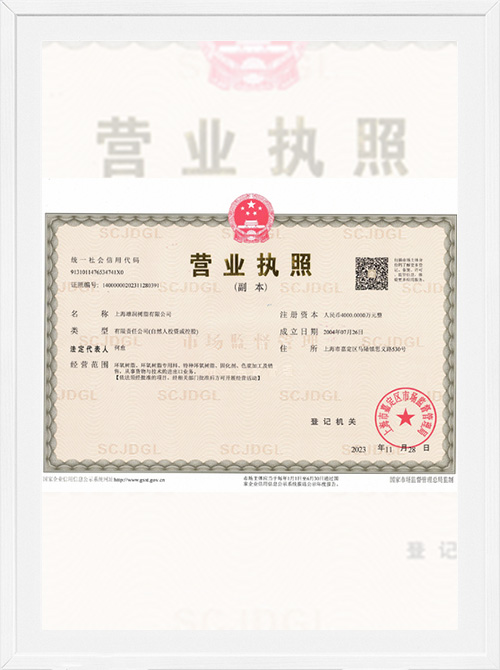
CERTIFIED BY
Certifications
INDUSTRY KNOWLEDGE
Industry Knowledge
Key Functions of Xrun Epoxy Resin Additives and Auxiliary Materials in Industrial Applications
Xrun Company, established on September 9, 1999, is the first company in China specializing in electrical insulating materials. As a National High-tech Enterprise and Specialized and Innovative SME, Xrun has obtained ISO9001, ISO14001, and ISO45001 certifications. With two factories in Jiading and Songjiang Districts, Shanghai, China, and a dedicated R&D Institute, Xrun focuses on the research, development, production, and sales of epoxy resin and polyurethane insulating adhesives. To date, Xrun has supplied over 180 thousand tons of epoxy materials for electrical insulation, supporting ultra/extra-high voltage GIS, GIL, dry-type transformers, and cable accessories.
Epoxy resin additives and auxiliary materials play a critical role in enhancing the performance, reliability, and processability of epoxy systems in industrial applications. Their functions can be categorized as follows:
Key Functions and Parameter Comparison
| Type of Additive / Auxiliary Material | Main Function | Performance Impact | Application Example |
| Accelerators | Reduce curing time | Faster production cycles, improved efficiency | GIS insulation casting |
| Thixotropic Agents | Control resin viscosity and prevent sagging | Better mold filling, consistent insulation thickness | Dry-type transformer epoxy molding |
| Coupling Agents | Enhance adhesion between epoxy resin and fillers | Improved mechanical strength, long-term reliability | Cable accessories, insulating bushings |
| Fillers & Extenders | Adjust thermal conductivity and reduce shrinkage | Improved heat dissipation and dimensional stability | GIL & GIS insulation |
| Flame Retardants | Improve fire resistance | Safety compliance, reduced flammability | Electrical insulation for switchgear |
Additional Benefits
- Enhanced Electrical Insulation: Additives increase dielectric strength and resist partial discharge in high-voltage equipment.
- Improved Mechanical Properties: Auxiliary materials enhance toughness, adhesion, and impact resistance.
- Process Optimization: Curing accelerators and viscosity modifiers reduce defects and allow more consistent production.
FAQ
Q: How does Xrun Company ensure the quality of epoxy resin additives and auxiliary materials?
A: Xrun Company uses automatic production, digital management, and a dedicated R&D institute to ensure consistent quality and compliance with ISO9001, ISO14001, and ISO45001 standards.
Q: What industrial applications benefit most from Xrun Epoxy Resin Additives and Auxiliary Materials?
A: Applications include ultra/extra-high voltage GIS, GIL, dry-type transformers, cable accessories, and other electrical insulation systems requiring enhanced adhesion, thermal stability, and dielectric performance.
Q: Can Xrun provide customized epoxy resin additives for specific client requirements?
A: Yes. As a leading Epoxy Resin Systems Manufacturer and Electrical Insulation Epoxy Resin Factory, Xrun offers tailored formulations and auxiliary material solutions for unique industrial applications.
Message Us Right Now!
Contact
Tel: +86-21-54943138
Phone:
Sales Ricky:+86-136 1183 0385
Sales Jason:+86-186 1635 6961E-mail: [email protected]
[email protected]
[email protected]
Get Connected
Copyright © Shanghai Xrun Resin Co., Ltd. All rights reserved. Privacy Wholesale Additives and Auxiliary Materials Company
