
 English
 Français
 русский
 Español
 Deutsch
 عربى
عربى




High Voltage 1100 kV Epoxy Resin Material: Properties, Standards & Applications
Content
The 1100 kV Threshold and What It Demands from Epoxy Resin
Ultra-high voltage (UHV) transmission at 1100 kV AC represents the current ceiling of commercial power grid technology. China's State Grid Corporation energized the world's first 1100 kV AC line — the Zhundong–Wannan project — in January 2019, stretching over 3,000 km across six provinces and capable of transmitting 12 GW of power. Since then, additional UHV corridors have entered service or are under construction across China, India, and Brazil, establishing 1100 kV as a live engineering environment rather than a laboratory specification.
At this voltage class, every material in the insulation system operates at or near the edge of its performance envelope. Epoxy resin used in 1100 kV equipment — gas-insulated switchgear (GIS) spacers, wall bushings, current transformers, and dry-type instrument transformers — must satisfy dielectric, mechanical, and thermal requirements that are qualitatively different from those at 110 kV or 500 kV. The electric field stress inside a cast insulator scales with voltage, and at 1100 kV, partial discharge inception voltage (PDIV) and partial discharge extinction voltage (PDEV) become primary qualification criteria rather than secondary checks.
The consequence is that high voltage epoxy resin material for 1100 kV applications cannot be selected from standard product portfolios without specific validation. Formulation, filler particle size distribution, void content after casting, and the homogeneity of the cured matrix all require tighter control than lower-voltage grades.
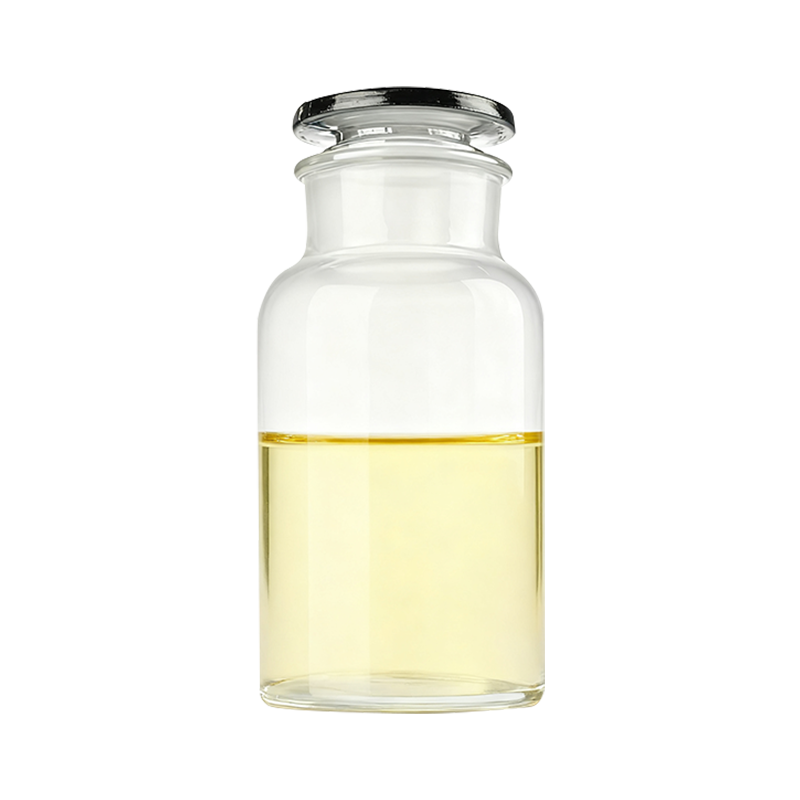
Critical Material Properties for Epoxy Resin For HV Electrical Systems
Several properties distinguish epoxy resin for HV electrical applications at the 1100 kV level from standard electrical-grade formulations. Each links directly to a failure mode observed in service or in type testing.
| Property | Typical Requirement (1100 kV Class) | Failure Mode if Insufficient |
|---|---|---|
| Dielectric strength | ≥ 18 kV/mm (IEC 60243) | Dielectric breakdown under lightning impulse |
| Partial discharge level | < 5 pC at 1.2 × Um/√3 | Progressive internal erosion and insulation life reduction |
| Fracture toughness (KIc) | ≥ 1.0 MPa·m½ | Crack initiation at metal insert interfaces under thermal cycling |
| Glass transition temperature | ≥ 100 °C (outdoor / GIS spacer) | Mechanical softening and dimensional instability under load |
| Volume resistivity | ≥ 10¹³ Ω·cm at 23 °C | Surface charge accumulation on GIS spacers in DC systems |
The partial discharge requirement deserves particular attention. In GIS spacers at 1100 kV, the electric field stress at the triple junction — where metal, epoxy, and SF₆ gas meet — is the highest-stress point in the insulator geometry. Voids as small as 50 µm at or near this junction can initiate PD at operating voltage, and the cumulative erosion from sustained PD will eventually cause flashover. This drives the use of ultra-low viscosity resin systems combined with vacuum casting to achieve void-free castings, alongside tight control of filler particle size to prevent agglomeration near critical surfaces.
UHV Grid Expansion and Its Impact on Epoxy Material Demand
The global UHV transmission pipeline is the primary demand driver for high voltage epoxy resin material at the 1100 kV class. China's 14th Five-Year Plan (2021–2025) and its successor framework earmark continued investment in UHV AC and DC corridors to connect renewable generation in the northwest and southwest with load centers on the eastern seaboard. State Grid Corporation of China and China Southern Power Grid together had commissioned or were constructing more than 30 UHV lines by the mid-2020s, each requiring substations equipped with GIS bays, instrument transformers, and surge arresters that rely on cast epoxy insulation.
India's Power Grid Corporation has published specifications for 1200 kV test stations and pilot transmission segments under its National Electricity Plan, targeting long-distance bulk power transfer from hydro and solar resources. Brazil's ANEEL has approved studies for UHV links connecting Amazonian hydro capacity to São Paulo and Rio de Janeiro. These projects represent substantial future demand for qualified 1100 kV-class epoxy casting systems outside China.
The shift toward high-voltage direct current (HVDC) at ±800 kV and ±1100 kV adds a further material qualification dimension. DC voltage stresses epoxy differently from AC: space charge accumulation within the resin bulk and at interfaces alters the effective field distribution over time, a phenomenon less pronounced under AC conditions. Epoxy formulations for DC UHV equipment therefore require characterization under DC electric field aging protocols — including IEC 62895 for HVDC cable accessories, which is increasingly referenced by equipment manufacturers as a benchmark even for non-cable insulation components.
Testing Standards and Qualification Requirements at 1100 kV
No single IEC or IEEE standard addresses epoxy resin material qualification specifically for 1100 kV equipment; qualification is instead assembled from multiple standards applied to the end product and its constituent materials. Engineers and procurement teams working with epoxy resin for HV electrical equipment at this voltage class typically reference the following framework.
- IEC 62271-203 (Gas-insulated metal-enclosed switchgear): Governs type and routine tests for GIS at rated voltages above 52 kV, including dielectric tests on spacers and bushings that serve as the functional qualification of the cast epoxy insulation system.
- IEC 60270 (Partial discharge measurement): The reference standard for PD measurement methodology applicable to all epoxy-cast HV insulation. Type test PD limits for 1100 kV GIS spacers are specified in equipment standards, but material-level PD testing under IEC 60270 is routinely performed during formulation development.
- IEC 60587 (Tracking and erosion resistance): Relevant for outdoor epoxy insulators and components exposed to surface contamination, rated by Comparative Tracking Index (CTI). UHV outdoor equipment typically requires CTI ≥ 600 V (Material Group I).
- GB/T 22707 and associated Chinese national standards: China's domestically developed UHV equipment standards, developed partly through national research programs involving materials suppliers, establish test protocols specifically calibrated for 1000 kV AC and ±800 kV / ±1100 kV DC systems.
- IEC 60455 (Resin-based reactive compounds for electrical insulation): The base material standard covering viscosity, gel time, Tg, dielectric properties, and mechanical characteristics for epoxy systems intended for electrical insulation applications across voltage classes.
Beyond formal standards compliance, 1100 kV equipment manufacturers typically impose their own qualification protocols — including accelerated thermal aging at 105 °C for 1,000 hours, mechanical shock testing per IEC 60068-2-27, and seismic performance verification for installations in earthquake-prone regions. Material suppliers seeking to qualify into UHV supply chains must be prepared to support full system-level testing at equipment manufacturers' high-power laboratories, not only material coupon testing at their own facilities.



Contact
Tel: +86-21-54943138
Phone:
Sales Ricky:+86-136 1183 0385
Sales Jason:+86-186 1635 6961E-mail: [email protected]
[email protected]
[email protected]
Get Connected
Copyright © Shanghai Xrun Resin Co., Ltd. All rights reserved. Privacy Custom Epoxy Resin Systems Suppliers
