
 English
 Français
 русский
 Español
 Deutsch
 عربى
عربى


Characteristics No sagging, good adhesion and good in...
Search
Form of matter
- Liquid state
Glass transition temperature
- 60-70℃
- 70-80℃
- 80-90℃
- 90-100℃
- 100-110℃
- 110-120℃
- 120-130℃
- 130-140℃
- 140-150℃
Classification
- Epoxy insulating glue
- --Polyurethane Series Insulating Adhesive
Characteristics
- Good adhesion
- Good insulation
- Low water absorption
- Flame- retardant
- High crack resistance
- High thermal conductivity
- Flexible
- Low stress
- Crack-resistant
- Resistant to thermal shock
- Flame retardant
- Low density
- No sagging
Hot Products
Polyurethane Series Insulating Adhesive Manufacturers
-
-
Characteristics Thermal conductivity of 0.9W/m.K, low...
-
Characteristics Low density, excellent flexibility, f...
-
Characteristics Long-lasting, good insulation perform...
-
Characteristics Excellent insulation, elasticity, low...
A complete range of models, excellent fluidity and process versatility; good flexibility, low stress, crack resistance, and excellent resistance to thermal shock; strong adhesion; flame-retardant VO.
| Formula | Viscosity(A/B), mPa.s | Gel time, min | Characteristics |
| HU-6101A/B=100/20 | 5000/200 | 90-120 | Excellent insulation performance, Flexible, Low stress, Crack-resistant, Resistant to thermal shock, Flame retardant UL94VO |
| HU-6103A/B=100/20 | 4500/200 | 300-400 | Long pot life, Excellent insulation performance, Low stress, Crack-resistant, Resistant to thermal shock, Flame retardant UL94 VO |
| HU-6302A/B=100/25 | 2500/150 | 60-90 | Low density, extremely flexible, Quick molding |
| HU-6509A/B=100/15 | 8500/180 | 90-150 | Thermal conductivity 0.9W/m.K, Low water absorption, Excellent insulation performance, Flame-retardant UL94VO |
| HU-6906A/B=100/25 | 12000/500 | 60-90 | No sagging, Good adhesion, Excellent insulation performance |
News Updates
Follow news and information to stay informed about industry trends
-
2026-10-15
Why the Supplier You Choose Determines Insulation Performance Electrical insulation is not a commodity purchase. A transformer that fails after two years, a GIS spacer that cracks under thermal cycling, or an FRP rod that delaminates under load all trace back to one decision made months earlier: wh...
-
2026-10-09
A transformer casting can pass a visual inspection and still fail partial discharge testing months later, and the reason is often hidden inside one process variable that nobody wrote down: the viscosity of the mixed resin at the moment it entered the mold. Voids that never escaped, glass cloth that...
-
2026-10-01
The 80% Rule: A Load Limit Backed by Insulation Physics The 80% rule for transformers states that a transformer should not carry a continuous load above 80% of its rated capacity. Push past that line and the unit is no longer considered healthily loaded. Windings run hotter, insulation ages faster,...
About Xrun Resin
Founded on Sept.9th,1999, Xrun is a professional company of electrical insulation materials. As China Polyurethane Series Insulating Adhesive Manufacturers, we can offering Custom Polyurethane Series Insulating Adhesive for transformers, GIS, switchgear, and cable accessories. With the advantage of speciality, Xrun focuses on R&D of epoxy resin and polyurethane insulating glue as well as the production, serving for electrical facilities. There are two factories(located in Jiading District & Songjiang District in Shanghai, China) and an R&D Institute. With more than 100 employees, it adopts automatic production and digital management. So far, Xrun has supplied the market with more than 180 thousand tons of epoxy materials for electrical insulation. As a company in the field, Xrun has undertaken several national projects of the domestication of new epoxy materials for electrical insulation.
1999
“ From this year “
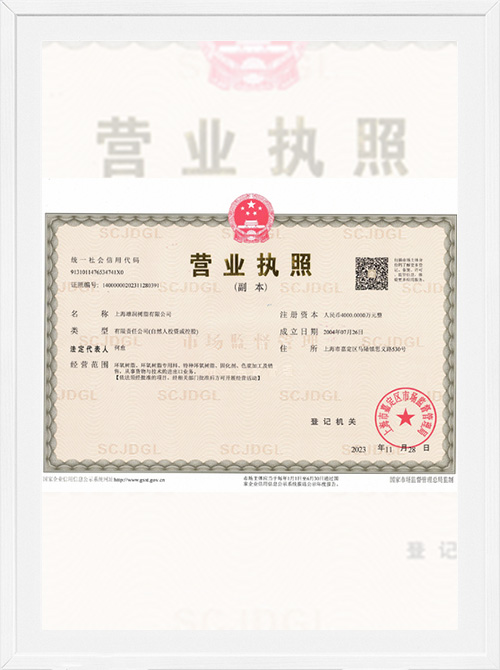
CERTIFIED BY
Certifications
INDUSTRY KNOWLEDGE
Industry Knowledge
How Does Polyurethane Series Insulating Adhesive Improve Insulation Performance?
In electrical engineering and advanced manufacturing, insulation performance is not only about preventing current leakage but also about ensuring stability under thermal, mechanical, and environmental stress. The polyurethane series insulating adhesive has become a critical material in achieving these goals due to its balanced mechanical flexibility, strong adhesion, and superior dielectric properties.
Working Mechanism of Polyurethane Insulation Systems
Polyurethane-based insulating adhesives function by forming a dense, uniform polymer network after curing. This structure fills micro-gaps, air voids, and surface irregularities in electrical components, significantly reducing partial discharge risks.
Unlike rigid insulation materials, polyurethane systems maintain elasticity after curing, which helps absorb mechanical vibration and thermal expansion stress. This dual function—insulation + stress buffering—directly contributes to long-term system reliability.
Key mechanisms include:
- Formation of high-density crosslinked polymer chains
- Excellent surface wetting and penetration into substrates
- Stable dielectric barrier against moisture and contaminants
- Stress distribution across bonded interfaces
Key Performance Advantages in Electrical Insulation
The growing demand for compact transformers, motors, and electronic modules has made insulation materials more performance-sensitive. The polyurethane series insulating adhesive offers several advantages:
- High dielectric strength for stable electrical isolation
- Excellent moisture resistance in humid environments
- Strong adhesion to metals, ceramics, and composites
- Thermal cycling resistance for long operational life
- Vibration damping to protect sensitive components
These characteristics make it suitable for both structural bonding and functional insulation in power equipment.
Functional Applications in Electrical Systems
Polyurethane insulating adhesives are widely used across multiple electrical insulation scenarios where both bonding and insulation are required.
| Function | Description | Typical Application |
|---|---|---|
| Electrical insulation | Prevents current leakage and arc formation | Coil insulation, busbars |
| Encapsulation | Protects components from moisture and dust | Sensors, modules |
| Potting compound | Fills voids for mechanical stability | Power supplies, transformers |
| Structural bonding | Provides mechanical strength | Motor assemblies |
| Vibration damping | Reduces mechanical stress | Automotive electronics |
This multifunctionality reduces the need for multiple materials, improving manufacturing efficiency and system integration.
Material Comparison in Insulation Systems
To understand the value of polyurethane-based systems, it is useful to compare them with other insulation materials:
| Material Type | Flexibility | Thermal Resistance | Adhesion | Application Suitability |
|---|---|---|---|---|
| Polyurethane series insulating adhesive | High | Medium–High | Excellent | Dynamic electrical systems |
| Epoxy resin systems | Low | High | Strong | Rigid structural insulation |
| Silicone-based materials | Very High | High | Moderate | High-temperature flexible sealing |
| Acrylic systems | Medium | Medium | Good | Light-duty insulation |
This comparison shows that polyurethane systems offer a balanced performance profile, especially where flexibility and adhesion are both critical.
Role in Thermal and Electrical Stability
Thermal management is a key challenge in modern electrical devices. As temperature increases, many insulating materials degrade or lose mechanical strength. The polyurethane series insulating adhesive helps maintain system stability by:
- Minimizing thermal expansion mismatch between components
- Maintaining elasticity across a wide temperature range
- Reducing hotspot formation through uniform encapsulation
- Preventing insulation cracking under repeated thermal cycles
These properties significantly extend service life and reduce maintenance frequency.
Industrial Development and Material Innovation
In the field of electrical insulation materials, continuous innovation in resin chemistry has driven performance improvements. One of the leading contributors in this field is Shanghai Xrun Resin Co., Ltd., a professional company specializing in electrical insulation materials.
The company focuses on the R&D and production of epoxy resin and polyurethane insulating adhesives, serving a wide range of electrical facilities. With two manufacturing bases located in Jiading District and Songjiang District in Shanghai, China, and an independent R&D institute, it has built a comprehensive material development system.
Its production capability and engineering focus include:
- Over 50,000 tons annual production capacity per factory
- Automated production lines for resin, hardener, and fillers
- Supply of more than 180,000 tons of epoxy insulation materials to the market
- Commitment to green manufacturing with 100% photovoltaic-powered factories
This integrated capability supports the continuous improvement of high-performance insulating materials such as polyurethane systems.
Conclusion
The polyurethane series insulating adhesive plays a vital role in improving insulation performance by combining dielectric protection, mechanical flexibility, and environmental resistance. Its ability to integrate bonding, sealing, and insulation functions makes it an essential material in modern electrical engineering.
FAQ
Q1: What makes polyurethane insulating adhesive different from epoxy insulation materials?
Polyurethane systems offer higher flexibility and vibration resistance, while epoxy materials are generally more rigid and heat-resistant.
Q2: Can polyurethane insulating adhesives be used in high-temperature environments?
Yes, they offer stable performance under moderate to high temperatures, though selection depends on specific formulation requirements.
Q3: What are the main applications of polyurethane series insulating adhesive?
They are commonly used in potting, encapsulation, coil insulation, and electronic module protection.
Q4: How does it improve electrical insulation reliability?
It forms a uniform dielectric layer that reduces air gaps, moisture intrusion, and partial discharge risks.
Q5: Is polyurethane insulation suitable for compact electronic devices?
Yes, its strong adhesion and flexibility make it ideal for miniaturized and densely packed electrical systems.
Message Us Right Now!
Contact
Tel: +86-21-54943138
Phone:
Sales Ricky:+86-136 1183 0385
Sales Jason:+86-186 1635 6961E-mail: [email protected]
[email protected]
[email protected]
Get Connected
Copyright © Shanghai Xrun Resin Co., Ltd. All rights reserved. Privacy Polyurethane Series Insulating Adhesive Factory
