
 English
 Français
 русский
 Español
 Deutsch
 عربى
عربى
Search
Product Category
Hot Products
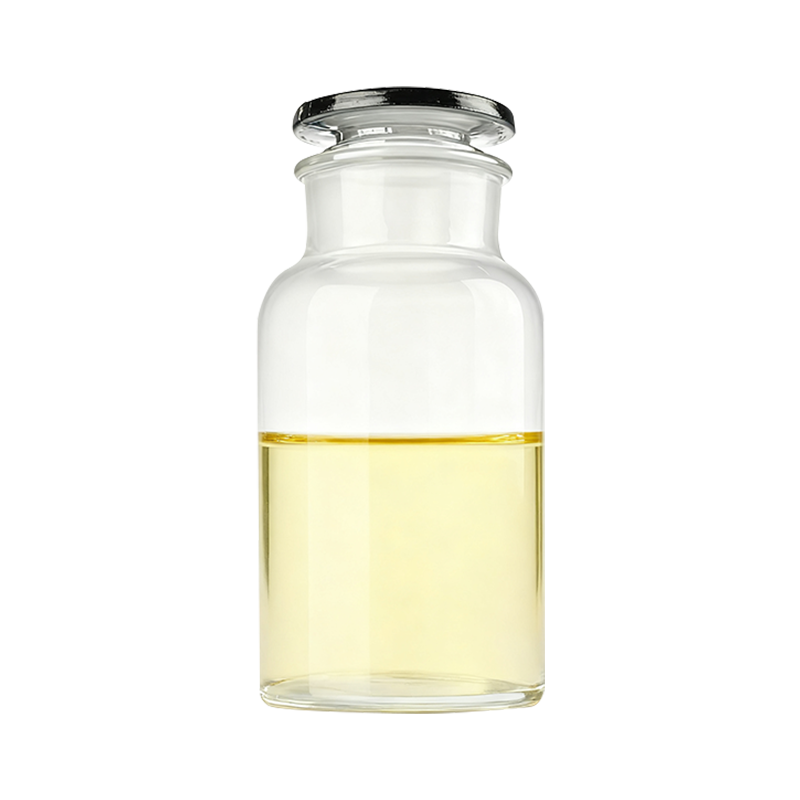
Epoxy Resin Systems Suppliers
-

-

Xrun modifies epoxy resin through molecular structure design...
-

A complete range of models, excellent fluidity and process v...
-
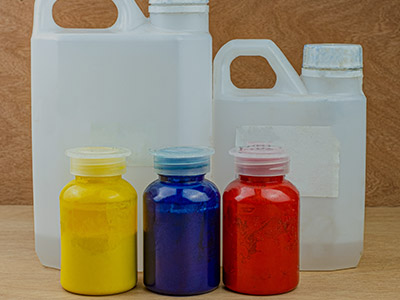
Model D50 Specific surface area Resting corner Uses ...
News Updates
Follow news and information to stay informed about industry trends
-
2026-10-15
Why the Supplier You Choose Determines Insulation Performance Electrical insulation is not a commodity purchase. A transformer that fails after two years, a GIS spacer that cracks under thermal cycli...
-
2026-10-09
A transformer casting can pass a visual inspection and still fail partial discharge testing months later, and the reason is often hidden inside one process variable that nobody wrote down: the viscos...
-
2026-10-01
The 80% Rule: A Load Limit Backed by Insulation Physics The 80% rule for transformers states that a transformer should not carry a continuous load above 80% of its rated capacity. Push past that line...
-
2026-09-24
If you are sourcing potting materials for transformer manufacturing or repair, understanding the relationship between "epoxy resin" and "casting resin" directly impacts your cost structure, manufact...
About Xrun Resin
Founded on Sept.9th,1999, Xrun is a professional company of electrical insulation materials. As Epoxy Resin Systems Suppliers, we can offering Custom Electrical Insulation Epoxy Resin for transformers, GIS, switchgear, and cable accessories. With the advantage of speciality, Xrun focuses on R&D of epoxy resin and polyurethane insulating glue as well as the production, serving for electrical facilities. There are two factories(located in Jiading District & Songjiang District in Shanghai, China) and an R&D Institute. With more than 100 employees, it adopts automatic production and digital management. So far, Xrun has supplied the market with more than 180 thousand tons of epoxy materials for electrical insulation. As a company in the field, Xrun has undertaken several national projects of the domestication of new epoxy materials for electrical insulation.
1999
“ From this year “
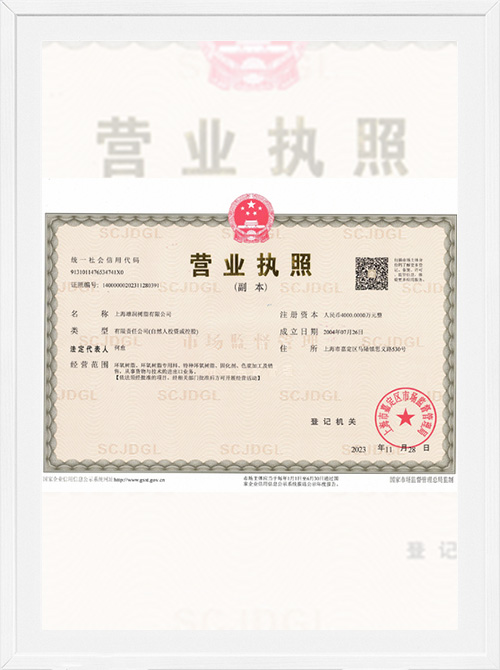
CERTIFIED BY
Certifications
INDUSTRY KNOWLEDGE
Industry Knowledge
Why is the field of electrical insulation increasingly reliant on Electrical Insulation Epoxy Resin?
With the continuous development of modern power systems towards higher voltage, larger capacity, and greater intelligence, a key material is becoming increasingly important—Electrical Insulation Epoxy Resin. It not only relates to the safe operation of power equipment but also directly affects the stability and lifespan of the power grid.
I. The Role of Electrical Insulation Epoxy Resin: More Than Just an "Insulating Material"
Electrical Insulation Epoxy Resin is not merely a traditional insulating coating or filler; it is more like the structural protective core of power equipment.
Under high-voltage environments, equipment is subjected to multiple effects from electric fields, thermal stress, and mechanical vibration over long periods. If the material properties are unstable, partial discharge, breakdown, or even equipment failure can easily occur. Epoxy resin, with its excellent dielectric properties, mechanical strength, and thermal stability, has become a crucial component of solid insulation systems.
Especially in dry-type transformers, GIS (Gas Insulated Switchgear), and medium- and high-voltage switchgear, epoxy resin not only performs insulation functions but also frequently serves as a structural support material, making its performance requirements far higher than those of ordinary industrial resins.
II. Expanding Application Scenarios Drive Performance Upgrades
As the complexity of power grid structures increases, the application scope of Electrical Insulation Epoxy Resin is also continuously expanding.
In the transformer field, it is used to cast windings, improving withstand voltage and reducing maintenance requirements; in GIS equipment, it is used to support conductors and achieve compact design; in cable accessories, it helps achieve uniform distribution of the interface electric field, thereby reducing the risk of partial discharge.
These application scenarios collectively present higher requirements: lower shrinkage rate, higher heat resistance, more stable dielectric properties, and long-term reliability under complex operating conditions. This also makes material development no longer a matter of single-formulation optimization but a manifestation of systems engineering capabilities.
III. The Core Behind the Technology: The Dual Challenges of Formulation and Process
The development of high-quality Electrical Insulation Epoxy Resin cannot be separated from the synergistic optimization of formulation design and production processes.
At the formulation level, a balance needs to be achieved between the epoxy matrix, curing system, and fillers to balance flowability, curing speed, and final performance. At the process level, from mixing and degassing to casting and curing, each step can affect the insulation stability and internal defect rate of the final product.
Especially in high-voltage applications, microbubbles or interface defects can become the starting point for partial discharge, thus requiring extremely high levels of cleanliness and automation in the production environment.
IV. Industry Practice of Shanghai Xrun Resin Co., Ltd.
In this field, Shanghai Xrun Resin Co., Ltd. has long focused on the research and development and manufacturing of electrical insulation materials, providing continuous material support to the industry.
Shanghai Xrun Resin Co., Ltd. is a professional company specializing in electrical insulation materials. As an epoxy resin system supplier, it can provide customized Electrical Insulation Epoxy Resin solutions for transformers, GIS, switchgear, and cable accessories.
Leveraging its specialized advantages, Xrun not only focuses on epoxy resin systems but also continuously invests in the research and development and production of materials such as polyurethane insulating adhesives, providing diversified material support for power equipment.
Currently, the company has two major production bases in Jiading and Songjiang, Shanghai, and has established an independent R&D institution, forming a system of coordinated development between R&D and manufacturing. The company adopts automated production and digital management models, significantly improving production efficiency and quality stability while enhancing consistency.
To date, Xrun has supplied the market with over 180,000 tons of electrical insulation epoxy materials and participated in several national-level electrical insulation material localization projects, providing crucial support for the independent control of key materials.
V. Customization and Future Trends: From Material Supply to System Solutions
As power equipment develops towards higher reliability and compactness, standardized materials are no longer sufficient to meet all application requirements. Customized Electrical Insulation Epoxy Resin is gradually becoming the mainstream trend.
Different equipment has significantly different requirements for viscosity, curing time, thermal properties, and dielectric strength. This requires material suppliers to not only have production capabilities but also a deep understanding of application needs.
Driven by this trend, Xrun continues to strengthen its R&D capabilities, providing customers with material solutions more tailored to actual operating conditions through formula optimization and application testing, transforming materials from general-purpose products to engineering solutions.
FAQ
Q1: What equipment is Electrical Insulation Epoxy Resin mainly used in?
It is mainly used in power equipment such as transformers, GIS switchgear, medium and high voltage switchgear, and cable accessories, serving as insulation and structural support.
Q2: What are the most critical performance characteristics of epoxy insulation materials?
Dielectric strength, heat resistance, mechanical strength, and long-term operational stability are the core indicators, while strict requirements are also placed on low bubble and low defect rates.
Q3: Why is customized epoxy resin needed?
Different power equipment operates under significantly different conditions, and standard materials cannot fully match the requirements. Customization can optimize electrical performance and process adaptability.
Q4: What are Xrun's main advantages?
Shanghai Xrun Resin Co., Ltd. has a complete R&D system, two major production bases, automated and digital production capabilities, and many years of experience in electrical insulation materials and large-scale supply capabilities.
Message Us Right Now!
Contact
Tel: +86-21-54943138
Phone:
Sales Ricky:+86-136 1183 0385
Sales Jason:+86-186 1635 6961E-mail: [email protected]
[email protected]
[email protected]
Get Connected
Copyright © Shanghai Xrun Resin Co., Ltd. All rights reserved. Custom Electrical Insulation Epoxy Resin Company
