
 English
 Français
 русский
 Español
 Deutsch
 عربى
عربى



What Is Electrical Epoxy Resin and How Does It Actually Protect Your Equipment?
Content
- 1 What Electrical Epoxy Resin Actually Is
- 2 How Electrical Insulation Resin Works at a Material Level
- 3 Types of Electrical Grade Epoxy Resin by Application
- 4 Where Epoxy Resin for Electrical Insulation Is Used
- 5 How to Select Electrical Epoxy Resin for a Given Project
- 6 Two Component Electrical Epoxy Resin vs Single Component Systems
- 7 Key Performance Properties to Evaluate
- 8 Frequently Asked Questions
What Electrical Epoxy Resin Actually Is
Electrical epoxy resin is a two-component thermosetting polymer system formulated specifically to insulate, protect, and mechanically stabilize electrical and electronic components. Once a resin base is combined with a hardener, the mixture cures into a rigid or semi-rigid solid that resists current leakage, moisture ingress, and physical stress. Unlike general-purpose epoxies used in construction or bonding, electrical epoxy resin is engineered around dielectric performance as the primary design target, with mechanical strength and thermal behavior treated as secondary but essential properties.
This material sits at the intersection of chemistry and electrical engineering. Its molecular structure, cross-link density, and filler content are tuned to interrupt the movement of free electrons across a surface or through a bulk material, which is exactly what makes it suitable for encapsulating transformers, insulating switchgear components, and sealing bushings against environmental exposure.

Working definition: An insulating epoxy resin is not a single formula but a family of chemistries, each balancing dielectric strength, viscosity, thermal class, and cure profile according to the voltage class and mechanical demands of the application.
How Electrical Insulation Resin Works at a Material Level
The insulating behavior of epoxy resin comes from its cured molecular network. When resin and hardener react, they form a dense, cross-linked structure with very few free-moving ions or electrons. This structure physically blocks the pathways that current would otherwise use to travel through or across a material.
Three Mechanisms That Drive Insulation Performance
- Volume resistivity determines how well the cured resin resists current flow through its bulk, which matters most in potting and casting applications where the resin surrounds an entire component.
- Surface resistivity governs resistance to tracking and flashover along the resin surface, a critical factor for outdoor bushings and switchgear exposed to contamination and humidity.
- Dielectric strength defines the maximum electric field the material can withstand before breakdown occurs, typically expressed in voltage per unit thickness.
Types of Electrical Grade Epoxy Resin by Application
Formulators adjust viscosity, filler loading, and cure chemistry to match the resin to its intended role. The table below summarizes common categories.
| Resin Category | Primary Function | Typical Use Case |
|---|---|---|
| Low viscosity casting resin | Deep penetration into windings and coils | Transformer coil impregnation |
| Thermally conductive epoxy resin | Heat dissipation alongside insulation | Power electronics, LED drivers |
| High dielectric epoxy resin | Maximum voltage withstand | High voltage bushings and insulators |
| Flexible or toughened resin | Crack resistance under thermal cycling | Outdoor switchgear components |
| Fast-cure potting resin | Rapid production turnaround | Electrical potting resin for connectors |
Where Epoxy Resin for Electrical Insulation Is Used
Transformers
Epoxy resin for transformer applications is typically used in dry-type transformer coil casting, where the resin replaces oil as the primary insulating and cooling medium. The resin must tolerate continuous thermal cycling while maintaining its dielectric properties over decades of service.
Switchgear
Epoxy resin for switchgear is used to insulate busbars, support insulators, and encapsulate current-carrying components inside compact enclosures where air-gap insulation would be impractical.
Bushings and Insulators
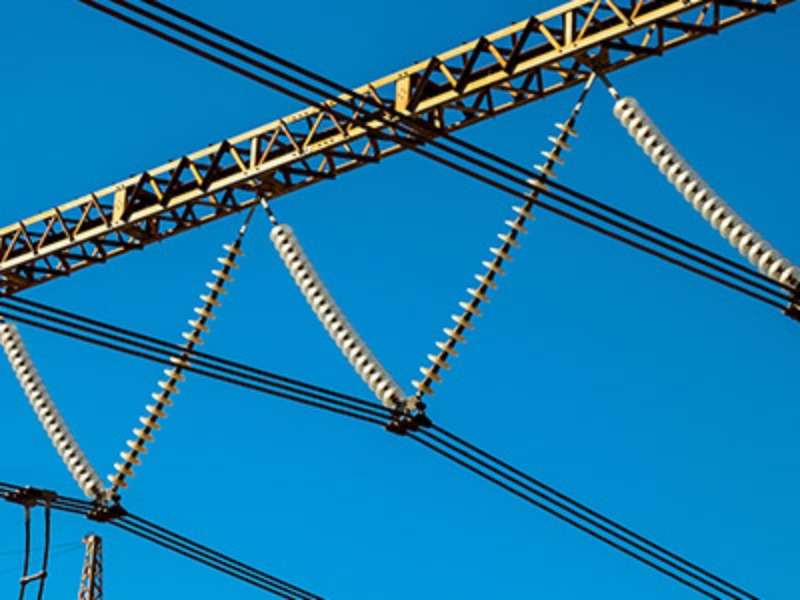
Epoxy resin for bushings forms the outer insulating shell around a conductor passing through a grounded barrier, combining mechanical support with sustained dielectric performance under outdoor weathering.
Field note: In one documented dry-type transformer retrofit, epoxy-cast coils replaced oil-filled units to eliminate fire risk in an indoor substation, while maintaining equivalent thermal class ratings across a twenty-year service projection.
How to Select Electrical Epoxy Resin for a Given Project
Choosing the right insulating epoxy resin requires matching material properties to the electrical and environmental demands of the application, not simply picking the highest dielectric strength available.
- Define the voltage class and required dielectric strength margin above operating conditions.
- Determine whether the application needs low viscosity for deep casting or higher viscosity for vertical surfaces.
- Check thermal class requirements against expected operating and fault temperatures.
- Evaluate whether thermal conductivity is needed alongside electrical insulation.
- Confirm cure time and pot life align with production or field application constraints.
- Review environmental exposure, including humidity, UV, and contamination, especially for outdoor components.
Two Component Electrical Epoxy Resin vs Single Component Systems
| Factor | Two Component System | Single Component System |
|---|---|---|
| Cure trigger | Mixing resin and hardener | Heat activation |
| Working time control | High, adjustable via mix ratio | Limited, fixed by formulation |
| Storage | Room temperature, separate components | Often requires refrigeration |
| Typical use | Field potting, casting, large components | Factory-controlled encapsulation |
A two component electrical epoxy resin system gives engineers direct control over pot life and cure speed by adjusting ratios or ambient temperature, which is why it remains the dominant choice for on-site potting and large-volume casting work.
Key Performance Properties to Evaluate
Beyond dielectric strength, several other properties determine whether a resin will perform reliably over its service life.
- Thermal class indicates the maximum continuous operating temperature the cured resin can withstand without accelerated degradation.
- Coefficient of thermal expansion affects how well the resin maintains adhesion and avoids cracking during temperature cycling.
- Moisture absorption influences long-term dielectric stability in humid or outdoor environments.
- Tracking resistance determines resistance to surface degradation from electrical discharge under contamination.
- Mechanical strength ensures the cured resin can support the physical weight and vibration loads of encapsulated components.
Frequently Asked Questions
Q1: How to select electrical epoxy resin?
Selection depends on matching voltage class, viscosity needs, thermal class, and environmental exposure to the specific application, whether that is coil casting, switchgear insulation, or bushing encapsulation.
Q2: What is epoxy resin used for in electrical applications?
It is used to insulate, encapsulate, and mechanically protect components such as transformer coils, switchgear busbars, bushings, and electronic assemblies from electrical and environmental stress.
Q3: How strong is electrical epoxy resin?
Strength varies by formulation, but electrical grade resins are engineered to combine high dielectric strength with mechanical durability sufficient to support and protect encapsulated components over decades of service.
Q4: Is epoxy resin electrically insulating?
Yes, when formulated for electrical use, cured epoxy resin has very high volume and surface resistivity, making it an effective insulator against current leakage and flashover.
Q5: Can epoxy resin withstand high voltage?
High voltage epoxy resin formulations are specifically designed with elevated dielectric strength and tracking resistance to withstand high voltage stress in bushings, insulators, and switchgear applications.
Contact
Tel: +86-21-54943138
Phone:
Sales Ricky:+86-136 1183 0385
Sales Jason:+86-186 1635 6961E-mail: [email protected]
[email protected]
[email protected]
Get Connected
Copyright © Shanghai Xrun Resin Co., Ltd. All rights reserved. Privacy Custom Epoxy Resin Systems Suppliers
